Batman and the Flashpoint Paradox: When Everything Changed
Among the most impactful stories in the DC universe, few have had as strong an effect as Flashpoint Paradox. This turning point, initiated by Barry Allen (Flash), disrupted the entire multiverse chronology. But at the heart of this temporal chaos, one figure stands, darker and more tragic than ever: Batman. Except this time, it's not Bruce Wayne… but his father, Thomas Wayne.
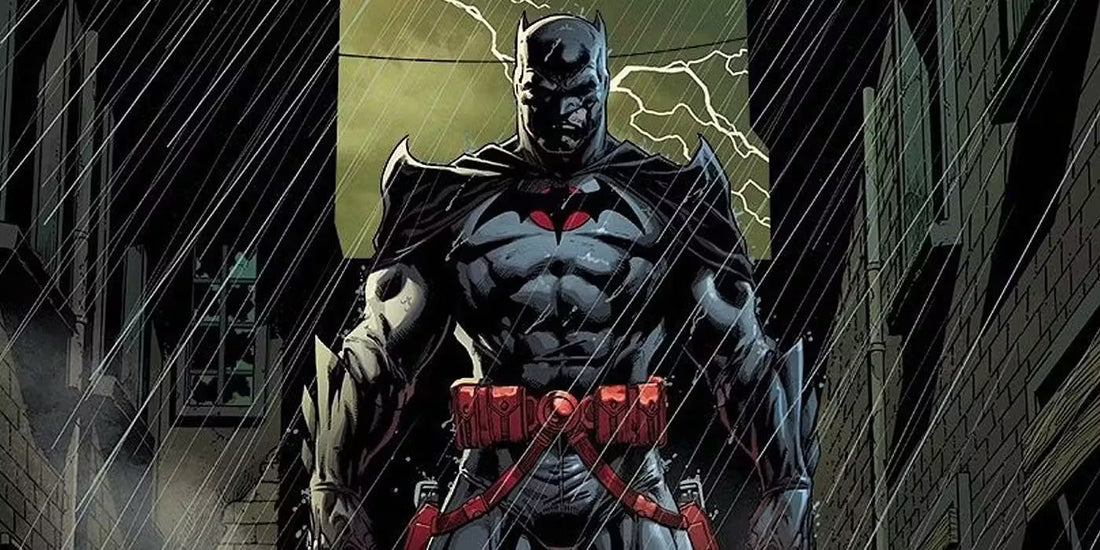
In this alternate reality, Bruce is killed in Crime Alley, while his parents survive — a chilling reversal of fate. Consumed by pain and anger, Thomas becomes a violent, merciless Batman, armed and desperate. Where Bruce embodies justice and resilience, Thomas symbolizes pure vengeance. This change in perspective makes Flashpoint a unique work, a distorted mirror of everything the myth of the Dark Knight represents.
This narrative is a powerful exploration of loss, guilt, and sacrifice. It raises the fundamental question: what if the heroes we know were shaped by a single choice? Batman is no longer just Gotham’s vigilante, but a living tragedy, reminding us that every heroic act can have a devastating cost.
👉 To better understand this duality, discover our article on the assassination of Bruce Wayne’s parents, a foundational event without which Flashpoint would never have existed.
And for fans of the complete DCEU universe, explore our chronological guide to the DC Comics universe — ideal for placing Flashpoint Paradox in its global context.
Finally, if you want to relive this dark and tragic atmosphere, discover our collector Batman figurines or embody the Dark Knight with a Batman costume inspired by the greatest films.
A Devastated World: The Altered Reality of Flashpoint
When Barry Allen travels back in time to save his mother from a tragic fate, he triggers a butterfly effect with cataclysmic consequences. The world he knows disappears, replaced by an altered reality where heroes have changed, alliances have broken, and the war between Wonder Woman and Aquaman has plunged Earth into chaos. In this new order, Gotham is more violent than ever — a hell of corruption and despair dominated by a very different Batman.
This Thomas Wayne is no symbol of hope. He kills without remorse, uses firearms, and transforms the Batcave into a veritable war bunker. Under this distorted version of the Dark Knight, the myth of justice becomes a cry of pain and rage. Yet, when Flash finds this alternate Batman, he sees in his eyes the same glimmer of determination as in Bruce’s: a will to fix the unfixable.
Their unlikely alliance is one of the most poignant moments of the story. Flash tries to convince Thomas to help him restore the original timeline, while the latter realizes he could save his son’s life — at the cost of his own. This duality between sacrifice and redemption gives Flashpoint Paradox a rare emotional depth, worthy of the greatest arcs in the DC universe.
👉 To explore other gripping Dark Knight stories, delve into our article on The Dark Knight trilogy, where the theme of sacrifice is central to Bruce Wayne’s destiny.
And if you want to relive this dramatic tension, discover our Flash and Batman figurines as well as our Batman poster collection to adorn your own Batcave with the colors of the DC multiverse.
Thomas Wayne: The Batman of Despair and Sacrifice
In this shattered reality, Thomas Wayne is no longer just a symbol of justice. He embodies a broken man, consumed by loss and guilt. Where Bruce chose the path of control and symbolism, Thomas plunged into brute violence. He does not seek to inspire, but to punish. His costume, more massive and bloody, his expedient methods, and his tired gaze convey a single truth: this Batman has nothing left to lose.
But it is precisely this suffering that makes his journey so moving. When Barry Allen reveals to him that in another reality, it was he — Bruce — who survived, Thomas understands the profound meaning of the paradox: there exists a world where his son was able to become a hero. This revelation shifts his internal struggle. The desperate father finally finds a reason to hope, even at the cost of his own existence.

The moment Thomas writes a letter to Bruce before disappearing remains one of the most striking scenes in all of DC history. This letter, transmitted by Flash, symbolizes everything Batman represents: pain, duty, and love behind the mask. It reminds us that even the darkest heroes find their light in human connections.
👉 You can find this legendary moment in our article on the essential Batman comics to read at least once, where Flashpoint is among the essential narrative arcs for any Dark Knight fan.
And for those who want to immortalize this alternate version of the hero, explore our Thomas Wayne Batman t-shirts and sweaters inspired by Flashpoint, perfect for collectors of the DC multiverse.
A Major Turning Point for the DC Universe
Flashpoint Paradox is not just an alternate story: it’s a total reinvention of the myth. Its success led to the creation of the famous The New 52 reboot, which redefined the DC universe for years. This new momentum allowed for the revisiting of many heroes’ origins, including Batman, further exploring his psychology, his legacy, and the ramifications of the multiverse.
But beyond its narrative implications, Flashpoint is a mirror of the human condition. It questions our regrets, our choices, and the temptation to erase the pain of the past — a temptation that Bruce Wayne knows all too well. As in the very history of DC Comics, every rebirth is born of a sacrifice, every new hope from an overcome tragedy.
This major work also inspired several adaptations, including the animated film “Justice League: The Flashpoint Paradox” (2013), acclaimed for its mature direction and raw emotion. It remains today an indispensable pillar for any Batman fan, a poignant reminder that even heroes are not immune to the flaws of time.
A Timeless Legacy for Gotham Fans
If Flashpoint is so fascinating, it’s because it reveals the very essence of Batman: a man shaped by loss, but driven by hope. Whether it's Bruce or Thomas, the symbol of the bat transcends eras and realities. It embodies the eternal struggle between light and darkness, justice and vengeance, past and future.
👉 To extend your immersion in this universe, discover our pillar page on Batman films or explore Gotham's dark narratives with our articles dedicated to Joker and Two-Face.
Flashpoint is not just a story about speed or time: it’s a tragic love letter to Gotham, to the Wayne family, and to the unwavering belief that a symbol, however broken, can still inspire the world.
📚 To go further: situate this work in the grand history of Batman comics by consulting the reasoned chronology of Batman comics, which compiles the 39 major works organized by the 7 great publishing eras from 1939 to today.