Why Doesn't Batman Kill? The Deep Reasons for an Unshakeable Moral Code
The answer in brief
Because the oath he took at age eight, before the grave of his murdered parents, sealed it for good: no other child would ever know that distress. Taking a life would make him no better than the gunman who created his calling. This ethic, inherited from the foundational tragedy, also preserves his inner balance: it keeps pain from degenerating into vengeance, and separates the vigilante from the criminals he hunts.
Contents
In the world of superheroes, Batman is probably one of the darkest, most violent, and most determined characters. He hunts criminals at night, uses fear as a weapon, breaks bones, tears armor apart. And yet, there is one rule he almost never breaks: he does not kill. This principle, often questioned by fans and by the villains themselves, is an integral part of his identity. Without this code, Bruce Wayne would be a different character — not necessarily less fascinating, but radically different.
This article explores the deeper reasons behind that moral choice. Traumatic origins, psychological structure, comparison with other vigilantes, the eternal dialogue with the Joker, controversial exceptions in the adaptations: we look at every facet of the rule that defines the essence of Batman. To place this code within the wider mythology, a detour through the path that turned Bruce Wayne into the Dark Knight provides the essential framework — without that oath, the hero would never have existed.
A moral code inherited from foundational trauma
It all starts with the same scene. One evening, leaving a movie theater, in the alley that has never stopped making Batman, eight-year-old Bruce Wayne watches his parents murdered before his eyes. Thomas and Martha Wayne fall in front of him, victims of a robbery gone wrong. This founding event is not just a narrative motivation — it is the psychological matrix of Bruce's entire life. Everything he will become afterward is an answer to that night.
The oath he swears at his parents' grave is explicit: he vows that no other child will go through what he has just lived. That promise is not a simple vow of revenge. It is a life project. And the refusal to kill follows directly from that logic. Killing would mean repeating the very act he fights. Killing would turn Bruce into an executioner, when he has sworn to be a protector.
This psychological dimension is explored in depth across several major arcs. Frank Miller's Year One shows the young Bruce hesitating in the face of the temptation of summary justice. The hero's origin story reveals the long years of training in which Bruce works to channel his anger without letting it spill over. For a comparison with the surviving parental figures, a detour through James Gordon, the moral pillar of Gotham is illuminating — Gordon embodies the institutional justice that Bruce bypasses without ever fully betraying it.
The key point
At eight years old, Bruce sees Thomas and Martha Wayne murdered in an alley. At their grave, he swears that no other child will live through that. Killing would mean repeating the act he fights and becoming an executioner rather than a protector.
A choice that structures his identity
Batman operates on the fringes of the justice system, yet stays firmly on the side of the law. He captures criminals, neutralizes them, and hands them over to the police or to institutions such as Arkham Asylum. Never does he claim the right to pass the final sentence. That stance sets him radically apart from the classic vigilantes who practice summary justice — he acts as a crimefighter, not as an executioner.
This identity structure is extremely rigid. Bruce knows that the slightest exception would bring the whole edifice down. If he killed even once, even for a just cause, he would open a moral breach through which other impossible decisions would follow. That is why he refuses even to kill the Joker, while everyone — including, at times, members of his own Batfamily — reminds him that it would save lives.
That morally costly rigidity is also what makes the character great. Bruce pays an enormous price for his code — the death of Jason Todd, the endless return of the criminals he locks up, the hundreds of victims of the Joker. But he refuses to give it up. This almost religious stubbornness fascinates readers precisely because it is nearly irrational. Pure logic would say: eliminate the Joker. Bruce's ethic says: no, never.

The hero who embodies the code
Batman Figure
The classic Batman figure reproduces the archetype of the Dark Knight — upright stance, steady gaze, solitary presence. To give physical form to the hero who carries this unshakable moral code on his shoulders, night after night.
109,90 €
Worth remembering
Batman captures criminals and hands them over to the police or to Arkham Asylum, without ever passing the final sentence. A single exception would bring the edifice down, hence his refusal to kill the Joker despite the death of Jason Todd.
A safeguard against his own darkness
The refusal to kill is not only an external principle. It is also a protection Bruce imposes on himself. Several recent comic arcs have explored the idea that Bruce knows how close he is to tipping over. The monastic strictness of his ethic is precisely what keeps him from becoming yet another Arkham patient himself.
This dimension is confronted head-on in The Batman Who Laughs, a nightmarish version of Bruce who killed the Joker and was infected by his madness. That alternate version is terrifying precisely because it confirms Bruce's fear: if I kill, I become him. This narrative extrapolation turns the hero's moral code into a psychological survival mechanism.
The other crucial dimension is physical proximity to death. Bruce spends his nights in the most dangerous alleys of Gotham. He comes across corpses, weapons, and criminals ready to kill on a daily basis. That permanent exposure to violence could easily desensitize him. That is exactly why he needs such a strict safeguard. The absolute rule of never killing keeps him human in spite of everything. To compare him with other figures of Gotham who crossed that line, a detour through Two-Face, the tragic enemy caught between justice and madness is essential — Harvey Dent was also a strict defender of the law before he fell. To go further on this subject, see also Batman: Ego (Darwyn Cooke, 2000) — the inner duel in which Bruce Wayne confronts the Bat.
In plain terms
The refusal to kill protects Bruce against his own darkness. The Batman Who Laughs, a version of Bruce who killed the Joker and was infected by his madness, embodies his fear: if he kills, he becomes him.
A philosophy in contrast with other vigilantes
To grasp what makes Batman's code singular, it has to be compared with the other approaches to vigilantism in the DC universe and beyond. Several figures embody the opposite position.
Azrael, when Gotham nearly replaced Batman is the most radical counter-example. Raised by the Order of St. Dumas to become a holy assassin, Jean-Paul Valley briefly replaces Bruce during the Knightfall arc — and kills. That substitution reveals by contrast just how unique Bruce is in his refusal. When someone else wears the cape, they always end up crossing the line. To dig into that arc, a detour through Knightfall, where Bane breaks Batman is essential.
Red Hood, alias Jason Todd resurrected and turned anti-hero, embodies another path. Killed by the Joker as a teenager, resurrected by a Lazarus Pit belonging to the League of Assassins, he comes back with one certainty: killing the most dangerous criminals is morally necessary. That ethical divergence triggers open conflicts with Bruce. Red Hood puts the impossible question to his adoptive father: how many deaths have you indirectly caused by refusing to kill the Joker?
In the Marvel universe, the Punisher embodies an even more extreme ethic. Frank Castle does not merely kill the criminals he runs into — he hunts them methodically in order to execute them. That radical philosophy is the polar opposite of Batman's, and that is precisely why the rare Batman/Punisher crossovers (yes, they exist) are so powerful. The two heroes clash less in combat than in philosophy.

The hero's moral mirror
Realistic Joker Collector Figure
The Joker embodies the ultimate test of Bruce's code. This realistic collector figure captures all the ambiguity of the Clown Prince of Crime — chilling smile, fixed stare, unsettling presence. A premium piece that gives form to the central moral dilemma of the Batman mythology.
99,90 €
Azrael
Jean-Paul Valley, raised by the Order of St. Dumas, briefly replaces Bruce during Knightfall and kills.
Red Hood
Jason Todd, resurrected by a Lazarus Pit, considers it morally necessary to kill the most dangerous criminals.
The Punisher
Over at Marvel, Frank Castle methodically hunts criminals in order to execute them.
An essential narrative tension in his stories
Beyond its ethical dimension, the refusal to kill is also a narrative engine. Without this rule, most Batman arcs would be impossible. The recurrence of his enemies — Joker, Penguin, Mr. Freeze, Riddler, Two-Face — rests entirely on the fact that Bruce does not eliminate them for good. Every saga can therefore build on the previous one, create long-running arcs, and stage duels that last for decades.
If Bruce killed, there would be no The Killing Joke. No Hush, where every villain returns. No No Man's Land and a Gotham in chaos. The narrative economy of the Batman universe rests entirely on this code. That is probably why DC Comics has never seriously considered calling the rule into question — the franchise would collapse.
This dimension is also what makes the alternate arcs (Elseworlds, multiverse) so fascinating. Batman: Last Knight on Earth (2019) shows a Bruce who ends up killing in a post-apocalyptic future. Batman: Damned explores the moral gray areas. These alternate stories do not invalidate the code — they reveal its fragility and its price.
The key point
The refusal to kill allows the enemies to come back, from the Joker to the Riddler, and duels that last for decades. Without this rule, there would be no The Killing Joke, no Hush, no No Man's Land.
Controversial exceptions depending on adaptations
On screen, Batman's moral code has taken some notable hits. Christopher Nolan's Dark Knight trilogy is famous for its ambiguities. Batman Begins has Bruce refuse to kill Ra's al Ghul, but then declare that he will not save him — a choice that is morally equivalent to murder by omission. The Dark Knight Rises has Batman take indirect part in the death of Talia al Ghul. Those nuances sparked debate among purist fans.
Zack Snyder's DCEU went further. Batman v Superman: Dawn of Justice (2016) shows Bruce explicitly killing several henchmen, with firearms, without hesitation. That highly controversial interpretation violently divided fans — some defending the coherence of the film's aging, disillusioned Bruce, others seeing it as a betrayal of the character. The debate is still not settled.
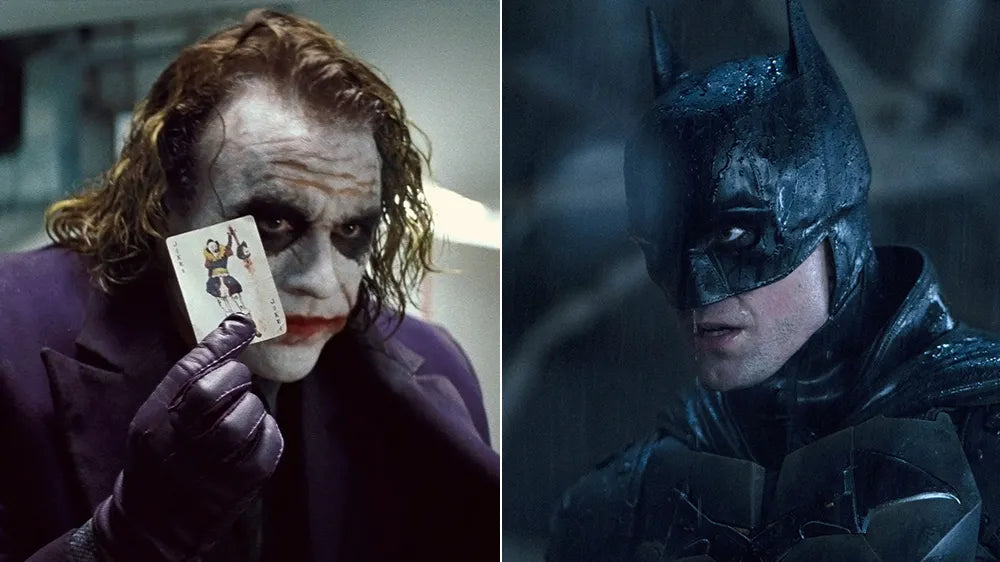
The Batman (2022) by Matt Reeves returns to a more orthodox Bruce. The young vigilante played by Robert Pattinson never explicitly kills, even when the opportunity presents itself. That faithfulness to the comics canon was praised by fans. To dig into the different screen incarnations, a detour through which Batman the public loved most is illuminating — the relationship to the moral code directly shapes how each actor is perceived.
| Film | Relationship to the code |
|---|---|
| Batman Begins | Refuses to kill Ra's al Ghul, but does not save him |
| The Dark Knight Rises | Takes indirect part in the death of Talia al Ghul |
| Batman v Superman: Dawn of Justice (2016) | Kills several henchmen with firearms |
| The Batman (2022) | Never explicitly kills |
The Joker, symbol of Batman's moral dilemma
No other character tests Bruce's code as much as the Joker. The Clown Prince of Crime has killed literally thousands of people over the decades. He tortured Barbara Gordon, murdered Jason Todd, crippled James Gordon. Every escape from Arkham costs more lives. And yet, Bruce brings him back alive every single time.
That stubborn repetition fascinates readers. Why does Bruce not do the one thing that would save Gotham for good? The answer has several layers. First, he knows that killing the Joker would validate the clown's thesis — that beneath civility, all men are monsters. Refusing to kill means refusing to hand the Joker the moral victory he has been chasing for decades. To dig into that dimension, a detour through Joker 2019 and its historic success is essential — the film tackles the Clown's thesis head-on.
Next, Bruce knows that the Joker's death would solve nothing. Another clown would emerge. Another madman would take his place. That thought may sound cynical, but it is documented across several arcs: every time the Joker briefly dies, an imitator appears. The evil is not in the individual, it is in the system. And Bruce, who fights the system, cannot settle for eliminating individuals.
Finally, and this is probably the deepest reason, the Joker has become a mirror for Bruce. Killing the Joker would mean admitting that there is nothing left to save in human beings. Refusing to kill means keeping hope alive. To understand the psychological dimension of that confrontation, a detour through The Killing Joke and its unsettling face-off is illuminating — every great hero has an evil mirror that tests his code.

The comics ethic, worn every day
Batman Comic Book T-Shirt
The Batman comic book t-shirt takes up the iconic look of American comics — the one that has carried the Dark Knight's moral code for 85 years. For fans who want to show their attachment to the original version of the Batman ethic.
35,90 €
The moral victory
Killing the Joker would validate his thesis that, beneath civility, all men are monsters.
Another clown
His death would solve nothing: an imitator would emerge, because the evil is in the system.
The mirror
Killing the Joker would mean admitting that there is nothing left to save in human beings.
The moral code put to the test by major traumas
Several major arcs have pushed Bruce's code to its absolute limit. When Jason Todd, his second Robin, is murdered by the Joker in A Death in the Family, Bruce wavers. He comes close to the edge. He could, in that precise moment, break the code. But he does not. That episode is probably the purest example of the code's strength — it holds up even against the worst personal grief imaginable.
When Barbara Gordon is crippled in The Killing Joke, Bruce goes through a similar moral crisis. Once again, he does not cross the line. That constant resistance is probably what sets Batman apart from other superheroes most profoundly. Most other heroes have never gone that far into pain, and so have never had to test their code at that level of intensity.
More recently, the City of Bane arc (2019-2020) pushed Bruce to his breaking point. Bane takes control of Gotham, kills Alfred Pennyworth, and imposes a reign of terror. Once again, Bruce does not kill. That loyalty to his code, even at the cost of losing Alfred — his surrogate father figure — is almost unbearable for readers. But it is precisely what keeps Bruce on the side of the heroes.
| Arc | Trial | Outcome |
|---|---|---|
| A Death in the Family | Jason Todd murdered by the Joker | Bruce wavers but does not kill |
| The Killing Joke | Barbara Gordon crippled | Bruce does not cross the line |
| City of Bane (2019-2020) | Bane kills Alfred Pennyworth | Bruce does not kill |
Why the code remains relevant in 2026
Three structural reasons explain the durability of the code. First reason: its ethical modernity. At a time when questions of summary justice, the death penalty, and legitimate violence dominate public debate, Bruce's refusal resonates particularly strongly. The Dark Knight's moral code has become a philosophical reference well beyond the world of comics.
Second reason: its ongoing narrative power. Without this code, the Batman universe would not have the longevity we know it for. The rule is what allows writers to build arcs across decades, reusing the same enemies in constantly renewed contexts. To bring that universe into your collection, the Batman figures collection and the Batman posters collection offer visual entry points to every player in the moral dilemma.
Third reason: psychological depth. The code lets writers explore guilt, doubt, temptation, and forgiveness. No other hero has an ethic that is both this rigid and this thoroughly tested. That rigidity produces the richest narrative complexity in the entire comics industry. For a comparison with other ethical figures, a detour through Batman and Green Arrow, two faces of the same justice offers a useful counterpoint — Oliver Queen shares the refusal to kill, but ties it to a political dimension Bruce has always rejected.
Ethical modernity
Against the debates on summary justice and the death penalty, Bruce's refusal resonates strongly.
Narrative power
The rule makes it possible to reuse the same enemies across decades, in renewed contexts.
Psychological depth
The code lets writers explore guilt, doubt, temptation, and forgiveness.
Conclusion: a rule that defines the essence of the Dark Knight
Batman does not kill. That sentence is probably the most important one in all of DC Comics mythology. Not because it is the most dramatic, but because it structures everything else. Without this code, Bruce Wayne would just be a dangerous billionaire in a bat costume. With this code, he becomes one of the greatest ethical characters popular fiction has ever produced.
To take the exploration further, there are several essential paths. First, read the arc A Death in the Family (1988) — the purest test of the moral code. Then, read The Killing Joke (1988) — the head-on examination of the Bruce/Joker dilemma. Finally, explore recent arcs such as City of Bane and Batman: Damned, which push the moral reflection into new territory. To turn that passion into a collection, the Batman t-shirts collection, the Batman masks collection and the Batman sweaters collection offer visual entry points to this whole mythology.
One thing is certain: as long as DC Comics keeps publishing Batman comics, the code will stay intact. Not out of blind tradition, but because this code is precisely what makes Bruce Wayne a hero rather than an ordinary vigilante. Refusing to kill means refusing to become like those you fight. And that is probably, in the end, the finest lesson the Batman mythology has ever offered its readers — since 1939, and probably for a very long time to come.