Who Killed Batman's Parents?
The answer in brief
Joe Chill, in the canonical version of the comics: an armed, desperate street criminal who crosses paths with the family as they leave the theater, demands their valuables, and shoots. Nothing like a crime premeditated by a supervillain, but rather the blind chance of a city eaten away by crime, which is what gives the tragedy its symbolic weight. Depending on the era, the films, or the animated series, however, this designated culprit has changed faces.
Contents
The fate of Bruce Wayne changed forever one tragic night in a Gotham City alley. While he was still only a child, he watched, powerless, as his parents, Thomas and Martha Wayne, were murdered. That trauma is the cornerstone of his transformation into Batman, the Dark Knight. But one question has haunted fans for decades: who really killed Bruce Wayne's parents?

In most versions of the story, the culprit is a street criminal named Joe Chill. This character embodies the blind chaos of a city eaten away by crime. But depending on the era, the comics, the films, or the animated adaptations, the identity of the murderer has sometimes changed, offering varied and nuanced interpretations.
👉 This article takes a detailed look at the different versions of this founding murder, their origins in the comics, their adaptations on screen, and their psychological impact on Bruce Wayne. Understanding this puzzle means diving into the very heart of the legend of the Batman myth on screen.
🎭 And to relive this legendary story, explore our Batman figure collection as well as our Gotham posters, perfect for true fans of the Dark Knight.
Joe Chill: the canonical murderer
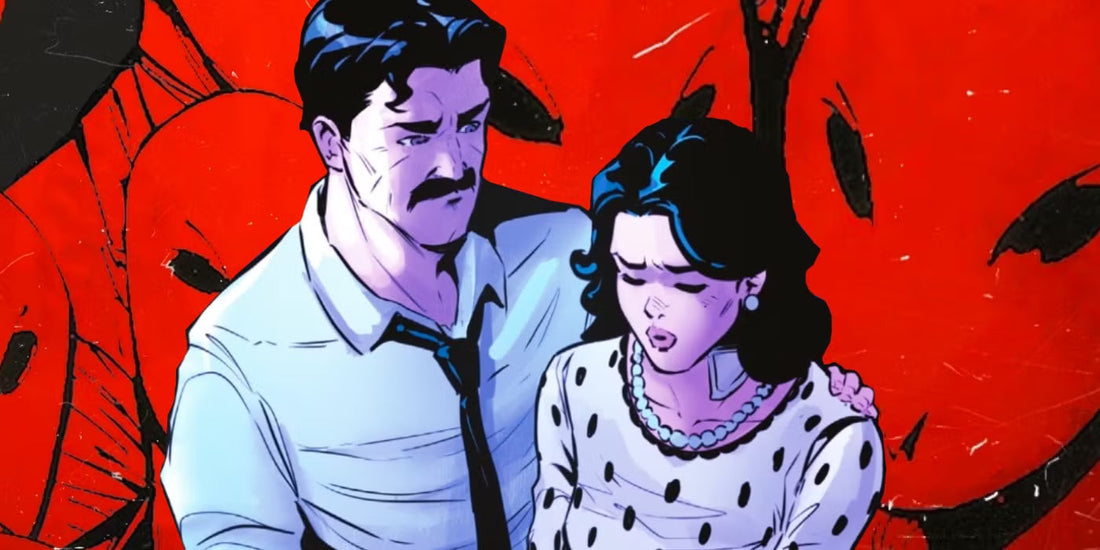
In the most widespread version of the comics, the man responsible for the murder of Thomas and Martha Wayne is a petty street criminal named Joe Chill. This armed and desperate robber crosses paths with the Wayne family as they leave a theater and tries to steal their valuables. The situation spirals out of control and Chill coldly guns down Bruce's parents, leaving the child alone in the middle of the alley.

This murder is not premeditated by some great supervillain, but the product of chance and of the everyday crime running through every one of the places that make up Gotham. That detail is what makes the tragedy even more striking: Batman was not born of a conspiracy, but of the ordinary chaos of a city eaten away by fear. The symbolism is powerful: any criminal can shatter a life, and it is that injustice Bruce Wayne will fight his entire life.
Over the years, some versions have even shown Bruce, now an adult, tracking down Joe Chill. In certain adaptations, he confronts him directly, sometimes by revealing his secret identity. In others, Chill is eliminated by criminals who fear he might reveal that he killed the future Dark Knight's parents. Either way, his name remains carved into the legend of Gotham.
👉 To go further into this first dark origin, read our dedicated article: How Bruce Wayne became Batman. And if you want to display a powerful symbol of that tragic night at home, explore our Batman lamps and our Gotham duvet covers, and step into the unique atmosphere of the Dark Knight's mythology.
When adaptations change the murderer
While Joe Chill is indeed the Waynes' killer in the canonical comics, some adaptations have chosen to alter that origin. This narrative choice gives Bruce Wayne's founding tragedy a more personal dimension, but it also ties his story to that of his future enemies.
In the film Batman (1989) by Tim Burton, it is the Joker – then known as Jack Napier – who is named as the murderer. That revelation gives their rivalry a tragic depth: the Joker created Batman, and Batman created the Joker.

Other stories have sometimes suggested that the murder could have been ordered by Gotham's criminal powers, such as Carmine Falcone or the future Penguin. These versions push the idea that Bruce Wayne's fate is bound to the city's great mafia families, underlining the corruption eating away at Gotham.
Finally, some series and animated adaptations have preferred to leave the murderer unknown, reinforcing the universal character of the tragedy. The culprit hardly matters: it is the act itself that shaped Batman.
You can also relive these legendary versions with our Batman costumes and Dark Knight masks.
| Version | The Waynes' murderer |
|---|---|
| The canonical comics | Joe Chill |
| Batman (1989) by Tim Burton | The Joker, then known as Jack Napier |
| Other stories | Someone who ordered the hit, such as Carmine Falcone or the future Penguin |
| Some series and animated adaptations | A murderer who remains unknown |
A murder turned symbol
Beyond the identity of the murderer, the real impact of the tragedy rests on what it produced. The murder of Thomas and Martha Wayne is not only the origin of Batman: it has become a universal symbol of the fight against injustice. Bruce could have sunk into hatred, but he chose to channel his pain by becoming the protector of Gotham.
That tragic scene, depicted and reinterpreted in nearly every work tied to Batman, reminds each generation of viewers and readers that the Dark Knight is not a hero by accident, but a man shaped by a loss he refuses to let happen again.
If you want to go deeper into the dark world of Gotham, discover our pillar page on Batman's enemies, where you will find major figures such as the Riddler or Mr. Freeze.
⚡ In the end, whether it is Joe Chill, the Joker, or an anonymous killer, what matters lies elsewhere: the murder of the Waynes is the birth of a timeless myth, that of the hero who chose to turn his pain into justice.
The key point
Whether it is Joe Chill, the Joker, or an anonymous killer, what matters lies elsewhere: Bruce chose to channel his pain and become the protector of Gotham rather than sink into hatred.
Why does this tragedy keep fascinating us?
If the death of Thomas and Martha Wayne is so striking, it is because it touches on universal themes: orphanhood, revenge, justice. It symbolizes the brutal passage from childhood to adulthood, and it brings out the weight of the choices we make in the face of pain. Where others would have chosen crime, Bruce Wayne decides to embrace the path of the masked vigilante.
Every adaptation – whether the films of Christopher Nolan, The Batman with Robert Pattinson, or the cult animated series – revisits this founding moment with a particular intensity. Viewers already know what is coming, yet they always wait for that scene, because it marks the starting point of everything.
💡 In the end, the murder of Batman's parents is not just a narrative element: it is a cornerstone of modern mythology, a legend reminding us that even in the deepest darkness, a light can be born that is ready to guide others.
Universal themes
The tragedy touches on orphanhood, revenge, and justice.
A choice in the face of pain
Where others would have chosen crime, Bruce Wayne embraces the path of the masked vigilante.
A scene we wait for
Every adaptation revisits this founding moment, which viewers know but always wait for.