"The Batman": a ratings failure for TF1, what lessons can be learned?
The answer in brief
Outpaced by Inspector Barnaby and its 2.76 million loyal viewers, then by 007 Spectre and its 2.47 million, the feature film drew only 1.78 million viewers, or 12.6%: an anomaly for the Sunday night leader. Six factors explain this disappointment: fierce rivalry, a very dark tone, a contested slot, weariness, reduced promotion, and a now-settled preference for streaming.
Contents
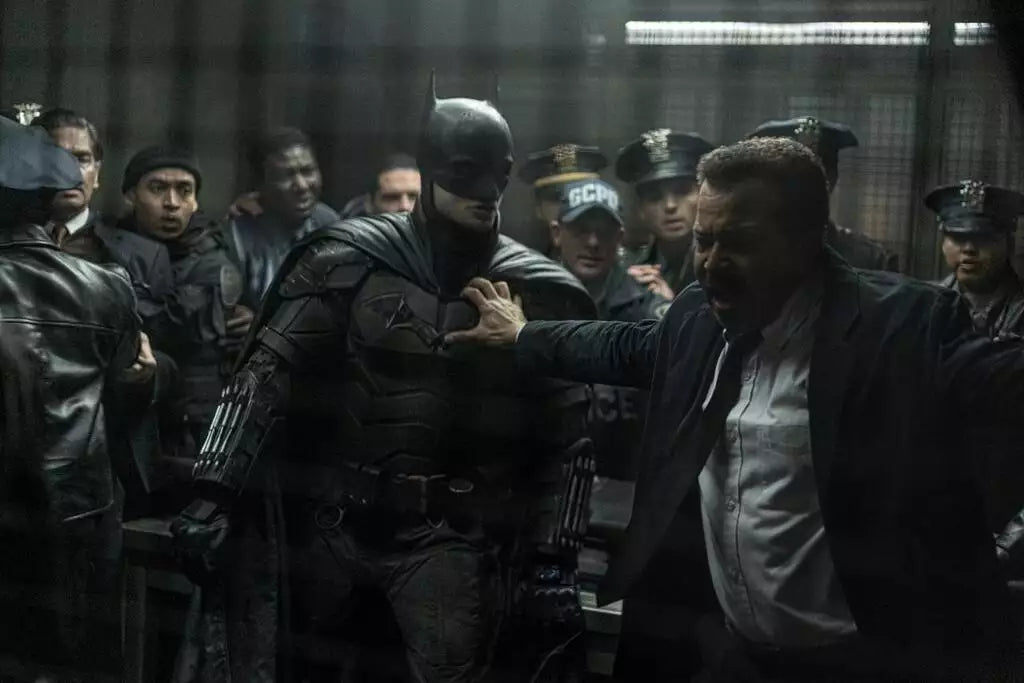
On Sunday, January 26, 2025, TF1 aired the blockbuster The Batman on free-to-air television for the first time, the film directed by Matt Reeves, released in 2022 with Robert Pattinson in the title role. On paper, the event had everything going for it: a globally famous superhero, a recent production praised by critics, a leading actor, and the Sunday night prime time slot. Yet the film failed to win the ratings battle, finishing third, far behind its competitors. More than a year after this underperformance, the analysis deserves a cool-headed revisit: what does this ratings failure really say about broadcasting superhero films on linear television in France, and what lessons can the channels draw from it for their future movie scheduling?
Beyond TF1's particular case, that evening of January 26 tells the story of a broader transformation: that of a French audience that no longer consumes blockbusters the same way, and that of a legacy channel that must redefine what a "major movie event" means in the streaming era. To understand what played out that night, you have to break down six distinct factors — competition, the film's tone, the time slot, weariness, promotion, streaming — and place them back in the broader context of Batman's evolution in cinema.
📺 Fierce Competition This Sunday Evening
One of the major factors explaining this ratings failure is the tough competition on Sunday, January 26, 2025. France 2 offered 007 Spectre, an installment of the James Bond franchise with Daniel Craig, which drew 2.47 million viewers for a 15.2% audience share. For its part, France 3 broadcast a new episode of Inspector Barnaby, bringing together 2.76 million loyal viewers for a 16.9% audience share. Up against these two heavyweights — one mainstream cinema, the other a comfortable and instantly recognizable crime series — The Batman gathered only 1.78 million viewers, or a 12.6% market share.
In absolute terms, that figure is not catastrophic for a television broadcast. But in audience share, it places TF1 behind two public service channels, which is an anomaly for the historic Sunday night leader. The result might have been different against a less solid competitor. In this case, though, scheduling a three-hour superhero blockbuster against two safe bets with complementary profiles (sleek action vs. nostalgic crime drama) amounted to giving up two audience segments usually receptive to genre cinema at the same time. To better situate the film within the complete genealogy of the Dark Knight's cinema adaptations, the panoramic article Which Batman was the most loved by audiences? compares precisely the box office figures and popularity of each incarnation.
The ratings of January 26, 2025
🎬 A Film Too Dark for the General Family Audience?
The Batman is known for its dark atmosphere, its almost monochrome cinematography, its contemplative pace and an approach more mature than previous adaptations of the Dark Knight. Matt Reeves embraces a direction inspired by 1970s film noir, by urban crime drama and by David Fincher's cinema, more than by the Marvel blockbuster or Warner's big colorful spectacles. Although that tone was praised by international critics, it may not have won over the French family audience of Sunday night, traditionally used to lighter, brisker blockbusters that work better in the second half of the weekend.
Moreover, the film's length — almost three hours — may have discouraged some of the viewers looking for less demanding entertainment to close out their weekend. Three hours is the equivalent of a double episode of a series, or even of a long TV movie and a short one back to back. It is also the typical format of major auteur films, not of the instantly consumable blockbuster. For anyone who wants to understand exactly how Matt Reeves built this new Batman and how it differs from previous adaptations, the comparative article What are the differences between The Batman 2022 and The Dark Knight trilogy offers a detailed analysis of each film's aesthetic and narrative choices.
This legacy of the "serious", adult Batman in cinema is nothing new. It was Tim Burton, starting with Batman 1989 and then Batman Returns 1992, who laid the foundations of a twilight, adult Dark Knight. Christopher Nolan would carry on that path with The Dark Knight 2008 and The Dark Knight Rises 2012, two blockbusters that proved a superhero film could be both dark and unifying. Reeves places himself in that tradition, but goes even further — at the risk of exceeding what the mainstream TV audience is prepared to accept on a Sunday night.
Tim Burton
With Batman 1989 and then Batman Returns 1992, he laid the foundations of a twilight, adult Dark Knight.
Christopher Nolan
The Dark Knight 2008 and The Dark Knight Rises 2012 prove that a superhero film can be dark and unifying.
Matt Reeves
He follows in that tradition and goes further, at the risk of exceeding what the television audience accepts.
📅 Inappropriately Scheduled for a Sunday Slot
Was airing The Batman on a Sunday night really the smartest choice? Superhero films with a more adult tone, especially those running over two hours, often meet with greater success during weeknight movie slots, where the competition is less intense and where the audience present is more loyal, more engaged, and more willing to invest three hours of viewing. On Sunday nights, the French television reflex remains firmly anchored around the mainstream family film or the comfort series — Inspector Barnaby, Capitaine Marleau, Joséphine ange gardien.
TF1 would no doubt have been better off scheduling this blockbuster on a Tuesday or Thursday night, a slot historically more forgiving for demanding films. The channel could also have created a genuine editorial event around the broadcast: a special program in the late evening, a debate on Batman's many incarnations in cinema, or a broadcast paired with a making-of documentary. On that note, the overview All the Batman movies: chronology of the cult saga would have provided an excellent educational angle to accompany the broadcast and place Reeves' film back in the long line of the character's cinema adaptations.
Another night
Schedule the film on a Tuesday or Thursday night, a slot more forgiving for demanding films.
A special program
Plan a special program in the late evening around the broadcast.
Debate or making-of
Organize a debate on Batman's incarnations or pair the broadcast with a making-of documentary.
🦇 The "Déjà Vu" Effect of the Batman Character
Although The Batman offers a new interpretation of the Dark Knight, French audiences may be suffering from a certain weariness toward a character adapted on a loop for almost four decades in cinema. After the memorable versions by Michael Keaton, Val Kilmer, George Clooney, Christian Bale and Ben Affleck, Robert Pattinson's arrival was not enough on its own to create the hoped-for television event. For many viewers, Batman in cinema has become a habit — which is precisely the trap of the overexposed superhero.
This weariness is paradoxically reinforced by the very quality of recent adaptations. The Dark Knight trilogy set the bar so high that it inadvertently overshadowed every later version. Heath Ledger's performance as the Joker — analyzed in the profile Heath Ledger as the Joker — left a lasting mark on audiences, and every new incarnation is now compared to that benchmark. This dynamic is confirmed by the stories from Nolan's casting, detailed in The cast of The Dark Knight: an exceptional ensemble.
For those who want to dig specifically into the cast and the behind-the-scenes stories of Reeves' film, the full article Everything you need to know about the cast of The Batman covers all the actors and their roles, from Pattinson to Zoë Kravitz by way of Colin Farrell as the Penguin and Paul Dano as the Riddler.
Key takeaway
After Michael Keaton, Val Kilmer, George Clooney, Christian Bale and Ben Affleck, Robert Pattinson's arrival was not enough to create an event, because every new version is compared to The Dark Knight trilogy.
📣 Insufficient Promotion for the Event
The promotion surrounding the broadcast of The Batman on TF1 seems to have fallen short of expectations for a blockbuster of this scale. In a highly competitive broadcasting landscape, it is essential to generate real buzz around an event such as a blockbuster aired free-to-air for the first time. TF1 could have leaned more heavily on punchy cross-program trailers, an outdoor advertising campaign, a partnership with a major social network, or a build-up special program early in the week.
The stakes are all the higher because the Batman audience is captive but segmented. Hardcore fans have already seen the film. The curious need to be convinced that this new version is worth the detour. Families want to know whether it is suitable for their children (answer: not really). Three audiences, three distinct promotional messages to orchestrate. TF1's campaign seemed to bet on a generic message of "great film, Sunday night, free", without tailoring its pitch to each segment. To compare with other successful event operations around the franchise, the article Batman Escape review: the ultimate immersive experience illustrates how a well-promoted operation manages to mobilize its target audience.

💻 The Silent Competition from Streaming Platforms
Finally, it is highly likely that competition from streaming platforms played a significant role in this ratings failure. With The Batman available on HBO Max and then on Max France since its release, many interested viewers had already watched the film through those services, sometimes more than once. For them, the TF1 rebroadcast was nothing new, and therefore no must-see appointment.
More broadly, film consumption in France is changing. A growing share of the audience, especially those under 35, now favors on-demand content over falling in line with the schedules imposed by linear television. The ritual of the Sunday night movie, still powerful among those over 50, is eroding among the new generations. This structural transformation is not going to stop — legacy channels must invent new reasons to watch together, live, at a fixed time.
Streaming has also changed audience expectations when it comes to discovery. On Netflix or Max, a three-hour film can be approached flexibly — you can pause it, pick it up again the next day, rewatch a scene. On TF1 on a Sunday night, it is all or nothing. That rigidity in timing mechanically penalizes long, demanding films. The same logic also holds back the television broadcast of other ambitious works in the genre — Batman video games, for example, now live more in gaming VOD than in dedicated TV programs.
The key point
Available on HBO Max and then on Max France, the film had already been seen by many viewers. With streaming you can pause and pick it up again, whereas on a Sunday night on TF1 it is all or nothing.
🎭 Villains as a Driver of Success — What TF1's Promotion Lacked
An important observation about the Dark Knight's history in cinema: the Batman films that perform best in the ratings are almost always carried by a great charismatic villain. Burton had Nicholson as the Joker. Nolan had Ledger as the Joker, then Bane played by Tom Hardy. Reeves' Batman, for its part, rests on a trio of villains (the Riddler, the Penguin, Carmine Falcone) who are less immediately recognizable to the general French public — especially without the educational groundwork a TF1 trailer could have laid.
To understand this structural role of villains in the Batman franchise, the pillar Batman's enemies: the complete guide to Gotham's legendary villains lists the entire rogues gallery, from the Joker to Bane by way of Oswald Cobblepot, Catwoman and Killer Croc. Many of these villains appear in different incarnations in the films, and the storytelling work around them remains a promotional field still largely untapped by television channels.
To go further on how new antagonists might reach the screen, the article Which new villains could appear in the next Batman movies offers a forward-looking scenario of the next big-screen villains. And on what is coming soon for the franchise, A sequel to The Batman: everything we know about The Batman Part 2 takes stock of Reeves' future film.

🏛️ Conclusion: Lessons for TF1 (and for linear television)
Despite its undeniable cinematic qualities — masterful cinematography, Michael Giacchino's lyrical score, Pattinson's hypnotic performance — The Batman did not manage to establish itself as the flagship film of that Sunday night on TF1. This ratings failure underlines the growing challenges facing traditional channels in the age of streaming platforms, of the multiplication of entertainment offerings and of increasingly diverse audiences.
To maximize the impact of its future film acquisitions, TF1 will have to rethink several structural reflexes. First, analyze the competition more closely before scheduling a major film, particularly against the comfortable public service crime series that hold the Sunday slot year after year. Next, choose slots better suited to the film's tone — a Tuesday night suits long, adult blockbusters better than a family-oriented Sunday night. Finally, significantly strengthen the promotion beforehand, by telling the film's story, introducing its key characters and building a genuine editorial event around the broadcast rather than a simple filler slot.
In the future, offering a unique and attractive cinema experience will be essential for TF1, which must adapt to viewers' new expectations to stay competitive. That will most likely mean more ambitious editorial work around every major film acquired: exclusive interviews, unseen making-of footage, lively debates in the late evening, and why not educational features on the film's universe. For Batman specifically, there is no shortage of material — whether retracing the character's complete history through How Bruce Wayne became Batman, exploring the city of Gotham City, or analyzing the mythology of the Batmobile and the Batcave.
For those who want to extend The Batman experience beyond the viewing, several pieces from the Batman figure collection, the Batman masks and the Batman costumes and suits make it possible to pay tribute to the Reeves version: from the iconic The Batman Robert Pattinson poster to the Batman mask from The Batman for cosplay, by way of the miniature Hotwheels Batmobile The Batman or the Bruce Wayne The Batman figure. And for those who would like to explore the franchise's announced next step, the article Batman: The Brave and the Bold (2026) — what we know about James Gunn's new movie projects the Dark Knight's cinematic future beyond the Reeves universe.