Batman's 5 Essential Allies
The answer in brief
None of the five pillars on this list is interchangeable, and not all of them are creatures of flesh: the selection mixes beloved presences, machines and decisive places. Robin, who arrived as early as 1940, brings the clarity that keeps Bruce from madness. Alfred, raised to the rank of father, patches him up, listens, tempers. Each element holds a precise function that no replacement could ever match.
Contents
The Dark Knight never acts alone. Behind the solitary image of Gotham's vigilante lies a network of indispensable allies — human, technological, urban — without which Bruce Wayne could not last a single night. This article reviews the five most structuring allies in Batman mythology, mixing human figures and strategic tools. Each one plays a unique role that no other could fill.
To place these allies within the wider mythology, a detour through the complete Batfamily and all the Dark Knight's allies is essential — five figures represent only part of the ecosystem, but they are the most indispensable ones.
1. Robin, the faithful companion
Robin is probably the most iconic of Batman's allies. The first one, Dick Grayson, appeared as early as 1940 — less than a year after the Dark Knight himself was introduced. That editorial speed says a lot about the importance of the concept: a dark adult hero needs a younger, brighter sidekick to avoid sinking into madness. Robin is the light that balances Bruce's shadow.
Over the decades, four young teenagers have worn the Robin costume: Dick Grayson, Jason Todd, Tim Drake, and Damian Wayne, Batman's biological son. Each brings a different dimension. Dick embodies the joyful legacy. Jason embodies the founding tragedy. Tim embodies detective intelligence. Damian embodies generational transmission.
Robin's role goes far beyond combat. He is also a therapeutic figure for Bruce. The presence of a young teenager constantly reminds the Dark Knight that there is still a world where youth is possible. Without Robin, Bruce would probably sink into the darkness of Arkham. To dig into that psychological dynamic, a detour through why Batman does not kill is enlightening — Robin's presence reinforces the moral code by giving it a visible recipient.

The #1 ally in your wardrobe
Robin Batman T-Shirt
The Robin Batman t-shirt celebrates the emblematic duo — the hero and his teenage sidekick. For fans who want to wear every day the symbolic father-son dynamic that has shaped eighty years of mythology. Classic cut, timeless design.
€29.90
| Robin | What he embodies |
|---|---|
| Dick Grayson | The joyful legacy |
| Jason Todd | The founding tragedy |
| Tim Drake | Detective intelligence |
| Damian Wayne | Generational transmission |
2. Alfred Pennyworth, the devoted butler
If Robin is the combat sidekick, Alfred Pennyworth is the silent soul. Butler to the Wayne family since before Bruce was born, Alfred becomes his legal guardian after the tragedy of Crime Alley. That makeshift role as an educator turns a household servant into a substitute father figure. Without Alfred, there simply is no functional adult Bruce Wayne.
Alfred plays several roles at once. He is the nurse who stitches up the wounds after every mission. He is the confidant who listens without judging. He is the voice of reason that reminds Bruce of his human limits. He is the historian who keeps the memory of Thomas and Martha alive. That plurality of functions places him at the absolute heart of the mythology.
In modern versions, Alfred has even put on a costume — Alfred the Outsider, an auxiliary vigilante. That late transformation proves how much the mythology recognizes his importance. But the best-loved version remains the classic one: an aging Englishman, ironic, unfailingly loyal. To dig into his place within the clan, a detour through the Wayne orphanage, between humanitarian aid and corruption is enlightening — Alfred is one of the only people who knows the full extent of Bruce's hidden philanthropy.
| Alfred's role | What he does |
|---|---|
| Nurse | He stitches up the wounds after every mission. |
| Confidant | He listens without judging. |
| Voice of reason | He reminds Bruce of his human limits. |
| Historian | He keeps the memory of Thomas and Martha alive. |
3. The Batmobile, the iconic vehicle
Beyond the human allies, the Batmobile holds a place of its own in the mythology. Not a simple car — a full-fledged character, one that has gone through as many variants as there have been actors playing Batman. Adam West's Batmobile (1966) remains iconic for its exuberant fins. Tim Burton's (1989) redefined modern design. Nolan's (the Tumbler, 2005) turned the aesthetic into a military vehicle. Matt Reeves's (The Batman, 2022) goes back to a raw muscle car.
Beyond the design, the Batmobile concentrates the hero's entire technological philosophy. Non-lethal machine guns (consistent with his unshakable moral code), communications jammer, bulletproof armor, autonomous mode linked to the Batcave. It is the whole Batman arsenal concentrated on four wheels.
The Batmobile says a great deal about its era. When it is exuberant, the tone is camp. When it is military, the tone is dramatic. When it is raw, the tone is noir. To compare those incarnations, a detour through which Batman audiences loved most gives a framework — every era has its beloved Batmobile.

Nightwing: the former Robin turned hero
Nightwing Mask - Handmade
Dick Grayson, the first Robin, became Nightwing in adulthood. This handmade mask reproduces his iconic look — blue and black, refined, independent. For fans who appreciate the emancipated-heir dimension of Batman's first sidekick.
€59.90
| Version | Year | Style |
|---|---|---|
| Adam West | 1966 | Exuberant fins |
| Tim Burton | 1989 | Modern design redefined |
| Nolan (Tumbler) | 2005 | Military vehicle |
| Matt Reeves | 2022 | Raw muscle car |
4. The Batcomputer, the indispensable tool
If the Batmobile is the mobile weapon, the Batcomputer is the strategic brain. Located at the heart of the Batcave, this supercomputer processes surveillance data, criminal profiles, crime scene analyses and global communications in real time. Without it, Bruce could not anticipate attacks, identify enemies or coordinate the Batfamily's actions.
The Batcomputer evolves along with real technology. In the comics of the 1960s, it was a mainframe with magnetic tapes. In the 1980s, a green terminal on a black background. In modern versions, it is a workstation with multiple screens, artificial intelligence and access to every database in the world, legally and illegally. That permanent updating makes the Batcomputer a character who never ages.
The most fascinating thing about the Batcomputer is that it often exceeds the official technological capabilities available at the time. Wayne Enterprises supplies officially abandoned military prototypes that Bruce customizes at the edge of legality. That R&D pipeline is probably the hero's best-kept secret. To understand the scale of Wayne Enterprises, a detour through Bruce Wayne's real fortune is enlightening.
The 1960s
In the comics, the Batcomputer is a mainframe with magnetic tapes.
The 1980s
It becomes a green terminal on a black background.
Modern versions
It is a workstation with multiple screens, artificial intelligence and access to global databases.
5. The Bat-Signal, Gotham's beacon
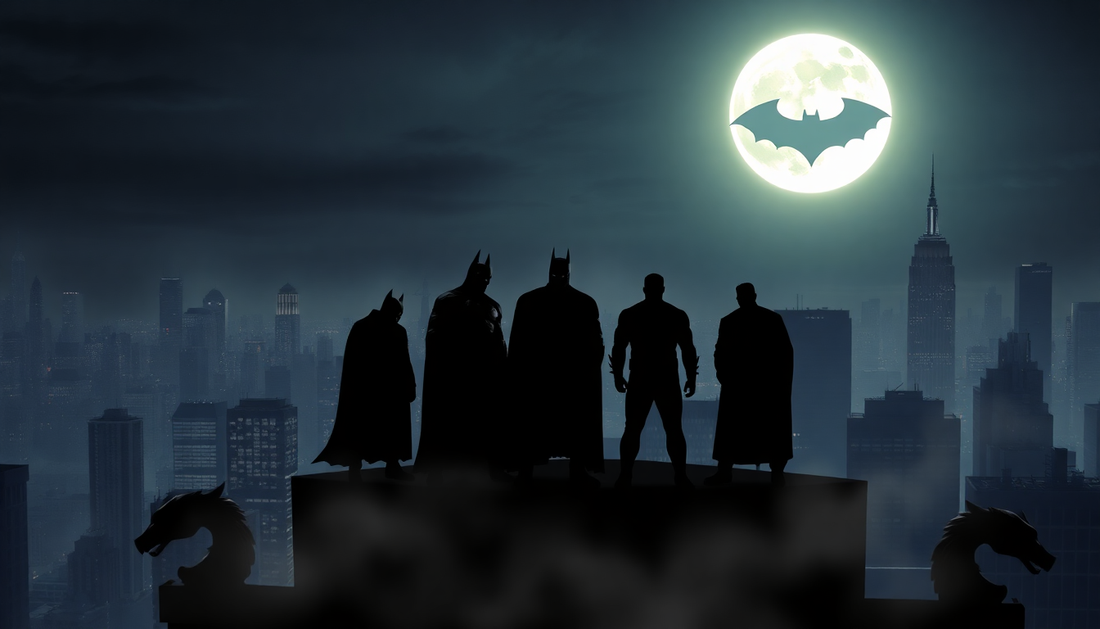
The Bat-Signal earns its place on the list of indispensable allies not for what it does, but for what it symbolizes. This searchlight installed on the roof of the police headquarters projects the Batman logo into Gotham's sky whenever a situation goes beyond what law enforcement can handle. It is the invention of James Gordon, introduced as the moral pillar of Gotham, probably the sixth ally if the list were extended.
The symbolic reach of the Bat-Signal goes far beyond its practical usefulness. It stands for hope in the face of crime, the possibility that justice will arrive after all, the idea that a hero is watching even when no one can see him. That psychological dimension is probably more valuable to the people of Gotham than every actual intervention by the Dark Knight. The visible presence of the Bat-Signal changes the city's relationship with crime.
On screen, the Bat-Signal has gone through several adaptations. In Batman (1989), it is a traditional searchlight. In The Dark Knight (2008), it is a means of communication that is still active but politically threatened. In The Batman (2022), it becomes the central object of the final scenes — proof of its symbolic centrality. To dig into that dimension, a detour through The Dark Knight trilogy that redefined Batman on screen is essential.

The emblematic duo on your keychain
Batman Robin Keychain
The Batman Robin keychain turns the most iconic duo in the mythology into an everyday object. Small, discreet, meaningful — the perfect gift for fans who want to carry with them the symbol of an alliance that has shaped eighty years of storytelling.
€15.90
Batman (1989)
Here the Bat-Signal is a traditional searchlight.
The Dark Knight (2008)
It is a means of communication that is still active, but politically threatened.
The Batman (2022)
It becomes the central object of the film's final scenes.
Other essential but less iconic allies
Beyond the top 5, several other figures deserve a mention. Lucius Fox, head of Wayne Enterprises, supplies cutting-edge technology. Barbara Gordon, alias Batgirl and later Oracle, brings the computing dimension. Catwoman is an occasional ally and an on-and-off lover. Wonder Woman and Superman in the Justice League are occasional allies against the great planetary threats. To go further on this subject, see also Figures of Batman's allies: the Bat-family and the heroes of Gotham to collect.
This wider gallery shows that Bruce, despite his solitary image, works as part of a team. That collaborative dimension goes far beyond that of other DC superheroes. To dig into how this team comes together day to day, a detour through the complete Batfamily gives a full overview.
The other important dimension is change over time. Batman's allies shift with the story arcs. Robin gives way to Nightwing. Tim Drake becomes Red Robin. Alfred starts wearing a costume in certain continuities. That internal mobility makes Batman mythology an extended family in constant evolution.
| Ally | Contribution |
|---|---|
| Lucius Fox | The cutting-edge technology of Wayne Enterprises |
| Barbara Gordon | The computing dimension, as Batgirl and later Oracle |
| Catwoman | An occasional ally |
| Wonder Woman and Superman | Occasional backup against planetary threats |
Conclusion: the apparent solitude of the Dark Knight
Bruce Wayne embodies the myth of the solitary vigilante — the one who watches alone in the night, who fights without respite, who carries the weight of Gotham on his shoulders. And yet, as this article has shown, that solitude is only an appearance. Without Robin, without Alfred, without the Batmobile, without the Batcomputer, without the Bat-Signal, the Dark Knight could not last a single night.
This dependence on human and technological allies is probably the greatest lesson of the mythology. No hero can truly operate alone. Acknowledging that truth makes Bruce Wayne a deeply human character, despite his superhuman image. To take the exploration further, there are several essential paths. First, read the recent Batfamily arcs that put each of the allies center stage. Then, watch Batman: The Animated Series (1992-1995), which defines the dynamic between Bruce and Alfred. Finally, play the Arkham saga, where every ally has an interactive role. Further reading: The Batcomputer: the Batcave computer that makes Batman the most dangerous detective in the world.
To turn that passion into a collection, the Batman figure collection, the sweater collection and the poster collection now include several references to the Dark Knight's main allies.