Clayface: The fallen actor turned mud monster
The answer in brief
Behind this name, several creatures succeed one another, never just one: Basil Karlo from 1940, Matt Hagen transformed in the sixties, Preston Payne condemned to degeneration, then Cassandra, a prisoner trapped in her own matter. The real danger is not brute force but metamorphosis: able to assume any identity, he infiltrates the masked hero's allies and spreads devastating paranoia among them.
In this article
In the long gallery of Batman's enemies, few embody tragedy and horror as much as Clayface. This iconic villain, in turn a cursed actor, a victim of failed experiments or a shapeless mud monster depending on the version, symbolizes the fragile line between art, glory and downfall.
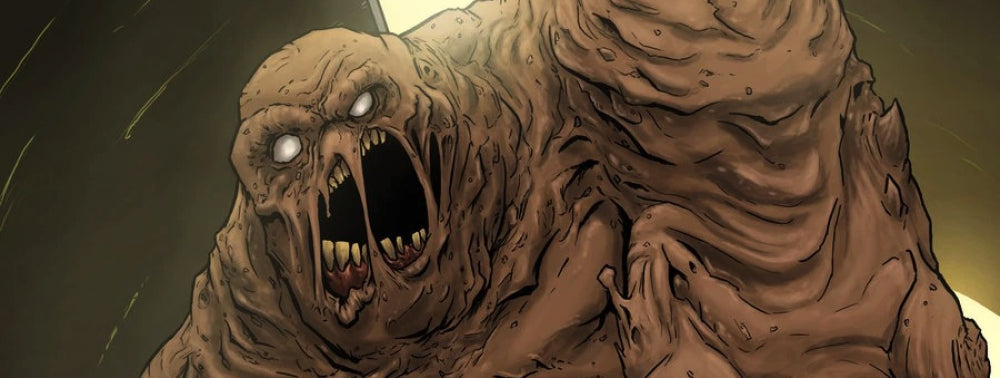
The first incarnation of Clayface, Basil Karlo, appeared in 1940 in Detective Comics #40. A former horror movie actor, jealous of a remake of his own film, he sinks into madness and puts on the costume of his cult character to spread terror. But it was with Matt Hagen in the 1960s that the character truly took off. Transformed into a creature able to reshape his body at will, he became a formidable and unpredictable enemy for the Dark Knight.
What makes Clayface unique is his shapeshifting ability. He can take on anyone's appearance, slip into the ranks of Batman's allies, or even become a living weapon thanks to his malleable body. This trait makes him an opponent as dangerous as he is fascinating.
Clayface is therefore a deeply symbolic character: a reflection of the obsession with fame, the weight of failure and the corruption of both body and mind. In this, he illustrates a central theme of the Gotham universe: even the greatest ambitions can turn into a nightmare.
👉 To dig deeper, discover our pillar page on Batman movies, where Clayface is regularly mentioned as a potential enemy to bring to the big screen, as well as our article on Hugo Strange, another tragic and manipulative villain.
The many faces of Clayface
Clayface is not a single character, but a succession of tragic figures who have carried this name over the decades. Each of them brings a particular nuance to the myth of the mud monster and enriches Gotham's mythology.
These incarnations show how malleable Clayface is as a character, both literally and figuratively. Sometimes a simple killer, sometimes a quasi-mythological creature, he reflects the obsessions of each era of comics. His ability to take on anyone's appearance also makes him a formidable psychological threat, since he can sow paranoia within the Batfamily itself.
In modern adaptations, notably the Batman Arkham video games or cult animated series like Batman: The Animated Series, Clayface is depicted as a colossal mud creature, able to crush his enemies and split into several forms. This version left its mark on generations of fans and reinforced his status as an essential villain.
👉 To discover other villains shaped by tragedy and transformation, dive into our article on Mr Freeze, whose personal pain rivals that of Clayface.
Clayface against Batman: an elusive enemy
Unlike criminals such as the Joker or the Scarecrow, who rely on psychology and terror, Clayface combines brute strength and cunning. His ability to change his appearance lets him infiltrate strategic locations, manipulate his enemies and even impersonate Batman's allies, sowing doubt and distrust within the Batfamily.
His clashes with the Dark Knight are often among the most spectacular in comics and animated series. Thanks to his malleable body, he can absorb blows, regenerate and turn his arms into devastating weapons. Faced with such a threat, Batman has to be doubly ingenious, using gadgets like the Sonic Batarang or chemicals capable of hardening or breaking down Clayface's clay-like matter.
Beyond physical strength, Clayface also represents an emotional challenge for Batman. In some versions, notably in Detective Comics Rebirth, Basil Karlo tries to redeem himself and even joins the Batfamily for a while. This fragile alliance shows that even among Gotham's monsters, there are souls in search of redemption. But as so often in the DC universe, this attempt at a fresh start quickly turns to tragedy.
Clayface thus embodies a deep duality: a terrifying monster for Gotham, but also a victim of his own fate. This ambiguity brings him close to other tragic figures of the Batman universe, such as Two-Face, torn between good and evil.
👉 To keep exploring the Dark Knight's greatest battles, discover our pillar page on Batman's enemies, where Clayface holds a prominent place.
Shapeshifting
He infiltrates strategic locations and impersonates Batman's allies, sowing distrust within the Batfamily.
Malleable body
He absorbs blows, regenerates and turns his arms into weapons; Batman responds with his gadgets and chemicals.
Emotional challenge
In Detective Comics Rebirth, Basil Karlo tries to redeem himself and joins the Batfamily for a while.
Clayface: a human tragedy in a monstrous body
Clayface is not just a mud monster ready to wreak havoc in Gotham. Above all, he represents a tragic figure: a man who lost his humanity while trying to hold on to it. This dramatic side makes him a complex character, very different from more "cartoonish" enemies. This psychological depth explains why he is regularly reinvented in comics, TV series and even video games like the Batman: Arkham saga, where his fights have become legendary.
A striking anecdote: in the '90s animated series, Clayface is portrayed as a fallen movie actor who, unable to control his transformations, goes through a descent into hell that is as heartbreaking as it is terrifying. This episode left its mark on a whole generation of fans, proving that the Batman universe could blend horror and emotion.
Beyond the character himself, Clayface illustrates a recurring theme in Batman stories: Gotham's monsters are not always born of evil, but of suffering and human tragedy. This nuance makes every clash between the Dark Knight and his enemies even more poignant.
👉 To go further, explore our article on Man-Bat, another hybrid creature born of science, or rediscover Poison Ivy, who embodies the line between humanity and monstrosity.
🎭 And if you want to show off your passion for Gotham, discover our Batman figures, our Batman t-shirts and our Dark Knight costumes to dive even deeper into the world of the masked vigilante.
Key takeaway
Clayface is above all a tragic figure: a man who lost his humanity while trying to hold on to it. The '90s animated series makes him a fallen movie actor, a reminder that Gotham's monsters can be born of suffering.