Justice League vs Avengers: Who would win in a clash?
The answer in brief
The pure energy advantage goes to the DC side: an oversized Kryptonian, an Amazon armed with a lasso, a speedster connected to the Speed Force. However, the imbalance is corrected by the flexibility of the Marvel camp, made up of improvisations, spells, and repeatedly upgraded armor. Hence the impossibility of a fixed verdict: the setting, preparation, and exploited weaknesses would truly decide the outcome.
The confrontation between the Justice League and the Avengers is a question that has captivated comic fans for decades. These two iconic teams represent the elite superheroes of their respective universes, DC and Marvel. But if these two pop culture titans clashed, who would emerge victorious? To answer, one must decipher the strengths, weaknesses, internal dynamics, and battlegrounds of each side—and accept that such a duel, in reality, never has just one possible answer. This is precisely what makes the question eternal.
🦸 Key members: a comparison of raw strengths
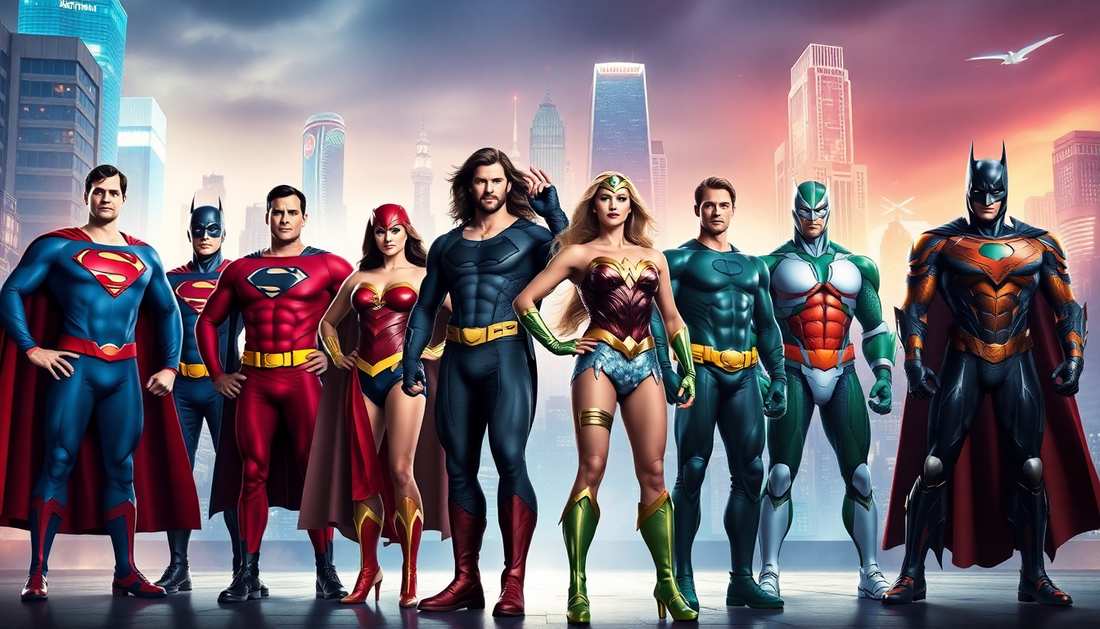
On the Justice League side, we're talking about a quasi-divine team. Superman is one of the most powerful beings in the DC universe, with inhuman strength, mind-boggling speed, his famous laser vision, and invulnerability that makes him almost indestructible. Wonder Woman, an Amazonian princess forged in Greek mythology, is an expert in close combat and wields her lasso of truth as a formidable weapon. Batman, devoid of powers but endowed with unparalleled strategic intelligence, compensates with paranoid preparation—that's the genius of the arsenal he deploys from the basement of Wayne Tower. Flash can travel through time and defy the laws of physics thanks to his mastery of the Speed Force. Green Lantern wields a ring capable of materializing anything his imagination can conceive. And Aquaman, King of Atlantis, controls the oceans with superhuman strength. To learn more on this topic, see also Batman and Wonder Woman: allies, rivals, or more?. To learn more on this topic, see also Batman and Aquaman: respect between two solitaries.
On the Avengers side, the range is more varied, more human, more adaptable. Thor, God of Thunder, manipulates electricity and wields Mjolnir. Iron Man, a billionaire genius with a questionable ethical lineage, perfects his armors at an industrial pace to respond to all threats—a field where the rivalry between Iron Man and Batman, the two billionaire vigilantes of pop culture, takes on its full meaning. Captain America, an unparalleled strategist and seasoned fighter, embodies the moral heart of the Avengers. Hulk is an uncontrollable brute force, whose power grows exponentially with rage. Scarlet Witch manipulates reality itself, making her one of the most dangerous super-heroines ever written. Finally, Doctor Strange, master of the mystical arts, can travel between dimensions and freeze time itself.
The verdict on the members is ambiguous. The Justice League seems to have an overall advantage in terms of raw power, especially with Superman, Flash, and Wonder Woman. But the tactical variety of the Avengers—their ability to improvise, to combine cosmic powers and advanced tech, to exploit the opponent's weaknesses—could largely compensate. This is exactly the question posed by the comparative analysis of Batman variants in the DC multiverse: pure strength isn't everything; context decides.
🧠 The strategic strengths and weaknesses of each team
The Justice League derives its power from almost surgical coordination, mostly orchestrated by Batman himself—the ultimate strategist, whose plans take into account the strengths AND weaknesses of each of his own allies. This obsessive planning is the direct legacy of a long line of Waynes: it's the same methodical rigor found in the historical management of the Wayne Enterprises empire or in the defense protocols of Wayne Manor, the secret headquarters of the Dark Knight. The raw power of Superman and Flash then acts as an almost unrivaled striking force.
The League's main weakness is, paradoxically, the very nature of its members. They are, originally, solitary heroes—accustomed to operating alone, making decisions alone, being right alone. When team dynamics are necessary, friction can arise. The run The Black Mirror, one of the most terrifying Batman comics ever written, shows how much Bruce himself can weigh on collective cohesion when his personal obsession takes over.
The Avengers, conversely, shine through their diversity of skills and adaptability. Leadership is shared between Captain America (the moral compass) and Iron Man (the technological genius), which gives the team the ability to pivot quickly in the face of an unexpected threat. Their weakness, however, is documented to the bone: internal conflicts. The Civil War saga showed how their enemies can divide their ranks with disconcerting ease—a pattern seen on a smaller scale in all Marvel teams.
Strategic verdict: while the Justice League can rely on extremely powerful individuals, the Avengers' experience as a cohesive team could give them a significant tactical advantage in the long run. The same tension between raw power and strategy is explored in the duel between Batman and Bane, which pits brute force against pure strategy—a textbook case in the Dark Knight's universe.

⚔️ Key duels: individual battles that would decide everything
Beyond the teams, it's the personal duels that most captivate comic fans. Superman versus Thor, first of all, would be a clash of titans between a Norse god and a quasi-divine extraterrestrial. Thor could hold his own against Superman thanks to Mjolnir and his mastery of lightning, but Superman could win thanks to his superior speed and his ability to fly without time constraints. This is typically the kind of battle imagined in comparative analyses between the greatest DC heroes like Batman and Superman—except here, the opponent comes from another universe.
The most anticipated duel obviously remains Batman versus Iron Man. Two billionaires with advanced gadgets, two strategic geniuses, two orphans who turned tragedy into a mission. While Iron Man is technically superior in terms of integrated weaponry, Batman could have the upper hand thanks to his meticulous preparation and his deep knowledge of adversary psychology—exactly how each gadget in the Bat-belt is designed to exploit a specific weakness. Bruce has spent years anticipating even his allies; a surprised Iron Man wouldn't last long.
For Wonder Woman versus Scarlet Witch, Wanda Maximoff's magic could be difficult for Diana to counter, but her superhuman strength, Amazonian warrior training, and lasso forged by Hephaestus could tip the balance. It would probably be the longest and most visually spectacular fight of the entire battle.
The duel Flash versus Doctor Strange is conceptually dizzying. Barry Allen's speed is a major asset, but Strange's mystical powers and his ability to manipulate time greatly complicate matters—Doctor Strange can literally make a hit never have happened. As for Aquaman versus Hulk, the geographical stakes are total: underwater, Arthur Curry is invincible and could control hydraulic pressure to neutralize Hulk; on the surface, Hulk is practically unstoppable and his rage would grow with each blow taken.
🌍 The role of circumstances: why the battleground changes everything
The winner of a Justice League versus Avengers confrontation would largely depend on the circumstances. On neutral ground—say space, or an empty parallel dimension—the Justice League would probably have the advantage thanks to Superman's brute strength and Flash's speed. These two alone would be enough to defeat several Avengers members before any collective fight could even be organized.
On Earth, and particularly in an urban environment, the Avengers regain a large part of their chances. Their adaptability, their experience of close combat in cities (Manhattan in particular), their gadgets calibrated for built environments—all of this gives them a massive tactical advantage. Hulk can turn an entire neighborhood into a weapon. Iron Man can exploit electrical infrastructure. Doctor Strange can isolate an area in a parallel dimension. The League, on the other hand, would constantly have to worry about collateral damage to civilians—a burden that the Avengers, in some modern versions, manage with more pragmatism.
This is a dynamic found in the best Batman collective combat narratives, such as the war against the Court of Owls that turns Gotham into a battlefield or the operations conducted around the Penguin's Iceberg Lounge: the terrain is not neutral, it takes sides.
🤝 What if the two teams collaborated against a common threat?
Rather than a confrontation, a collaboration between the Justice League and the Avengers against a common threat—Darkseid for DC, Thanos for Marvel—would probably be even more spectacular than a fratricidal battle. It would be the ultimate fight against absolute evil, bringing together the best heroes from both universes in unprecedented coordination. The JLA/Avengers crossover by Kurt Busiek and George Pérez, published in 2003, indeed explored this possibility—and the conclusion is clear: together, they are almost invincible.
This possibility also opens up fascinating questions about relational dynamics. How would Batman coexist with Iron Man in the same HQ? How would Captain America react to Superman's moral rigidity? What place for the young sidekicks—Damian on the DC side, Spider-Man on the Marvel side? Damian Wayne, Bruce's fiery son would probably have a contentious relationship with almost all senior members of both teams, true to his explosive personality. The other Batman sidekicks—Nightwing, Red Hood, Robin would, on the contrary, bring valuable team experience, having spent their lives coordinating their work with their mentor's.
Alfred's presence in the shared HQ would also be an underestimated factor: Alfred Pennyworth, the irreplaceable butler of the Batcave, would probably manage the logistics of the shared base with the same composure he displays in the face of Bruce's worst nights. And that would not be a minor detail. An inter-universe team needs a human anchor point.

🌌 The big question: could the Justice League really lose?
An honest analysis, in purely statistical terms, gives a slight advantage to the Justice League. Superman and Flash are, in classical canon, more powerful than any Avengers equivalent. But that is precisely what makes the fight interesting: victory is never based solely on raw power statistics. It is based on the details. The weather. The presence or absence of Kryptonite. Bruce's emotional state. Cap's fatigue. Doctor Strange's mystical whim. This is exactly the lesson taught by the Flashpoint Paradox arc, which shows how a single tiny change can overturn an entire universe.
The other often-overlooked factor is the depth of the bench. The Justice League is not limited to the seven founding members: it can call upon Martian Manhunter, Cyborg, Green Arrow, Hawkgirl, and even Lex Luthor himself when he temporarily takes on the role of hero. The Avengers have an even deeper bench with Ant-Man, Falcon, War Machine, Vision, and many others. A total confrontation between the two teams would probably last weeks.
For those who want to extend the debate into their daily lives, the complete collection of Batman figurines gathers all versions of the Dark Knight that could find themselves in such a battle—from classic Bruce Wayne to tactical armored Batman. Batman posters and decorative Batman canvases allow you to display mythical scenes from the DC universe in your home. For cosplay enthusiasts who want to embody their favorite hero within this dream team, the collection of Batman costumes and outfits offers every version of the Dark Knight, and the collection of Batman masks completes the look. Finally, Batman t-shirts and Batman mugs offer a more discreet way to show your allegiance to the DC camp in the eternal Marvel/DC war.
🃏 Verdict: A Legendary Duel Without a True Winner
Justice League versus Avengers? It all depends on the scenarios and interpretations. While the Justice League dominates in terms of raw power, the Avengers shine with their adaptability, collective combat experience, and ability to exploit tactical weaknesses. In some scenarios, Superman would crush Thor in thirty seconds. In others, Scarlet Witch would simply neutralize the Justice League with a snap of her fingers. The truth is, the magic of this imaginary confrontation lies precisely in its lack of a possible conclusion.
This is also the beauty of the superhero genre. These characters are not meant to win or lose inter-universe competitions: they are meant to embody moral and existential questions. The Justice League asks the question of almost divine power; the Avengers, that of augmented humanity. Both teams speak to different things within us. And that's why we continue, sixty years after their creation, to imagine this battle that will never truly happen. And in your head, who wins?